Replacing Manual Sales Tracking with a Fully Automated GoHighLevel CRM
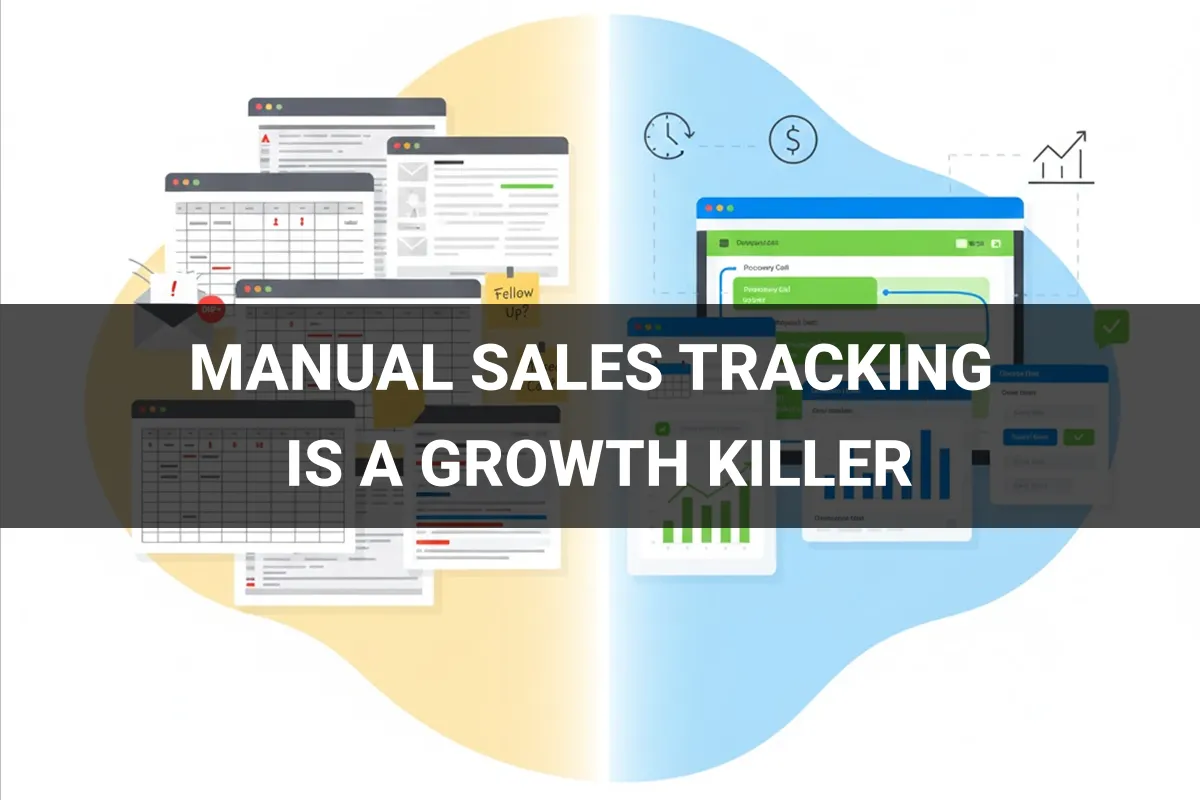
Manual Sales Tracking Is a Growth Killer
Manual sales tracking quietly drains revenue.
Spreadsheets, disconnected CRMs, inbox follow-ups, and human reminders may work at low volume - but as leads increase, these methods introduce:
Missed follow-ups
Inaccurate pipeline visibility
Unreliable forecasting
Slower deal velocity
Sales team frustration
At MBA (My Business Automated), we replace manual sales tracking with fully automated GoHighLevel (GHL) CRM systems that deliver real-time visibility, consistent follow-up, and predictable revenue flow.
This article explains why manual sales tracking fails, what a fully automated GHL sales system actually looks like, and how we build it.
Why Manual Sales Tracking Breaks as You Scale
Manual tracking depends on people remembering to do the right thing - every time.
Common Problems with Manual Sales Tracking
Leads fall through the cracks
Follow-ups happen too late (or not at all)
Sales reps update pipelines inconsistently
Managers lack real-time insight
Forecasts are based on guesswork
Revenue systems that rely on memory don’t scale.
As lead volume increases, these gaps compound and directly impact conversion rates.
Why GoHighLevel Is Built for Sales Automation at Scale
GoHighLevel isn’t just a CRM - it’s a sales operating system when implemented correctly.
When architected as a system, GHL unifies:
Lead capture
Pipeline management
Sales follow-up
Appointment scheduling
Reporting and attribution
The problem is not the tool - it’s how it’s implemented.
The MBA Approach: Sales System First, CRM Second
At MBA, we don’t start with fields and pipelines.
We start with sales behavior and outcomes.
Our Core Principle
The CRM must enforce the sales process - not document it after the fact.
Automation is used to guide, validate, and accelerate every sales action.
Phase 1: Mapping the Sales Lifecycle
Before building anything in GHL, we define:
Lead entry points
Qualification criteria
Sales stages and exit conditions
Ownership rules
Conversion milestones
This creates a single source of truth for the sales process.
Phase 2: Automated Lead Capture & Attribution
Manual data entry is eliminated.
We configure GHL to:
Capture leads from forms, funnels, chat, calls, and ads
Automatically tag lead sources
Assign pipeline stages on entry
Route leads to the correct rep instantly
Every lead is tracked from first touch to close.
Phase 3: Pipeline Automation That Enforces Action
Instead of relying on reps to move deals, the system does it.
Automated Pipeline Capabilities
Stage movement based on actions
Auto-task creation for reps
SLA timers and reminders
Inactivity detection
Escalation for stalled deals
The pipeline becomes an active system - not a static report.
Phase 4: Automated Follow-Up Across Channels
Most revenue is lost in follow-up - not closing.
We build multi-channel follow-up systems using:
SMS
Email
Voicemail drops
Calendar booking links
Follow-up sequences adapt based on:
Lead response
Stage movement
Time delays
This ensures every lead receives consistent, timely engagement.
Phase 5: Appointment Scheduling and Confirmation Automation
GHL replaces manual scheduling entirely.
Automation includes:
Real-time calendar availability
Automated confirmations and reminders
Missed-call text-back
No-show recovery sequences
Sales reps focus on conversations - not coordination.
Phase 6: Sales Visibility, Reporting, and Forecasting
Manual reporting disappears.
We configure dashboards that show:
Pipeline value by stage
Conversion rates
Rep activity and performance
Lead source ROI
Forecasted revenue
Leadership gains real-time sales clarity without chasing updates.
Artifacts That Power a Fully Automated Sales System
Scalability depends on structure - not heroics.
Core Sales Automation Artifacts
Sales Lifecycle & Pipeline Architecture Diagram
Lead Qualification Ruleset
Automation Workflow Blueprints
Follow-Up Sequence Libraries
Sales SLA & Escalation Rules
Revenue & Conversion Dashboards
These artifacts ensure consistency as teams grow.
Before vs After: Manual vs Automated Sales Tracking
Before
Spreadsheet-driven pipelines
Inconsistent follow-up
Poor visibility
Revenue leakage
Founder-dependent oversight
After
Automated pipelines
Consistent multi-channel follow-up
Real-time reporting
Higher conversion reliability
Sales teams operating independently
Typical directional outcomes:
20–40% increase in lead-to-appointment conversion
Faster response times (minutes instead of hours)
Improved forecast accuracy
Reduced sales admin workload
Why MBA: GoHighLevel Built as a Revenue System
Most GHL implementations stop at setup.
MBA builds sales systems that:
Enforce best practices automatically
Reduce reliance on human discipline
Scale with volume
Align sales behavior with revenue outcomes
A CRM should drive sales - not depend on salespeople to keep it updated.
Conclusion: Automation Turns Sales Tracking into Sales Execution
Manual sales tracking tells you what already happened.
Automated sales systems shape what happens next.
By replacing manual tracking with a fully automated GoHighLevel CRM:
Leads are never ignored
Follow-up is always consistent
Pipelines stay accurate
Revenue becomes predictable
That’s what modern sales operations look like.
References
GoHighLevel – CRM & Automation Platform
https://www.gohighlevel.com/Harvard Business Review – Sales Process Design
https://hbr.org/Gartner – CRM Best Practices
https://www.gartner.com/en/sales/insights/crmHubSpot – Sales Automation Guide
https://www.hubspot.com/sales-automationMcKinsey – Sales Productivity at Scale
https://www.mckinsey.com/capabilities/growth-marketing-and-sales/our-insightsSalesforce – Sales Pipeline Automation
https://www.salesforce.com/products/sales-cloud/overview/Forrester – Revenue Operations Strategy
https://www.forrester.com/Bain & Company – Sales Effectiveness
https://www.bain.com/insights/topics/sales/MIT Sloan – Digital Sales Systems
https://sloanreview.mit.edu/Deloitte – Sales Transformation
https://www.deloitte.com/global/en/our-thinking/insights/topics/sales-transformation.html